Communication & Events 6 min read
L’Échappée Belle: what the table of the Banquet de Lyli is saying
The theme of the first edition is a tribute. Here is where it comes from, how it reads in the run of the evening, and why it is played out on the plate as well.
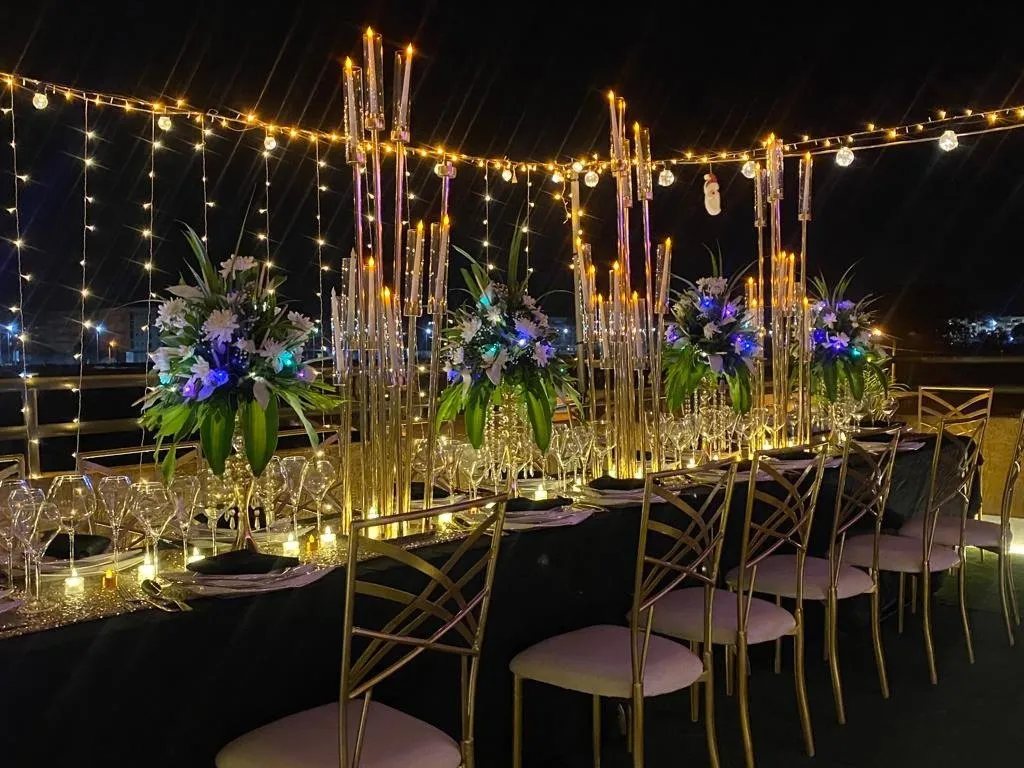
The theme of an event is rarely chosen because it sounds good. This one was kept because it says exactly what the evening intends to do, and nothing more: une échappée belle is a way out — out of the rut, out of the hard year, out of the stretch of time nobody had planned for. The phrase assumes there was something to leave behind, and it refuses to dwell on it.
The theme is a tribute, not a case file
The first edition of the Banquet de Lyli is addressed to the women and men who have been through an ordeal — professional, family, health-related or personal — and who have pulled themselves out of it. What is invited is not the account of the ordeal; it is the way out: what was rebuilt afterwards, and often with no audience at all.
That distinction has practical consequences across the whole production. Nobody is asked to recount what they went through. They are offered a seat, a room that rises to its feet, and an evening where the conversation is about what comes next. It is a banquet of honour, with everything the word implies in terms of bearing: named places, a formal welcome, short addresses.
Three movements, in this order
The running order is not decoration — it carries the argument.
- The opening ceremony. Addresses by the institutional partners. This is the moment when the event leans on organisations that also support those who get back up and build.
- The tributes. Words delivered from the rostrum, measured and prepared, directed at those the evening honours.
- The banquet and the artistic programme. From that point on, the room stops listening: it dines, it talks, it dances.
Around five hundred guests are expected — company directors, senior managers from the public and private sectors, women entrepreneurs, people from the not-for-profit world, cultural professionals and public figures.
The light does half the work
The event opens at 3 p.m., in broad daylight. That is unusual, and it is deliberate: the evening is built to follow the course of the sun.
- 3 p.m. — the light is still high. The garden is crisp, the colours are clean, people can genuinely see one another.
- 5 p.m. — it turns to gold. Faces warm up, photography becomes generous.
- 8 p.m. — the lanterns take over. The table stays lit, everything else recedes.
This progression is not an effect: it is a lighting plan, written in advance, with the circuits and the loads. An evening that begins in daylight cannot be set like an evening that begins after dark — the changeover has to be planned, and planned slowly enough that nobody notices it.
The table says the same thing as the theme
Mechoui, local and European flavours, table service, pâtisserie. The menu is not there to impress but to hold the argument: you do not celebrate a way out of an ordeal with a boxed meal.
Three choices deserve explaining, because they come up at every banquet we produce:
The mechoui is prepared upstream, not in the kitchen. It requires a dedicated area, a cooking time that cannot be compressed, and carving performed in front of the guests. That is what makes it a moment rather than a dish: the piece arrives whole, it is seen, then it is served.
Quantities are calculated on confirmed covers, never on invitations sent. The gap between the two is where the most is wasted, in both directions: too much and food is thrown away; too little and the last table served is the one that remembers.
Table service requires aisles. A seating plan drawn without circulation condemns the service to pass behind the chairs. So the floor plan is drawn with the maître d’hôtel, not after him.
Élégance Solaire, in noble materials
The announced dress code — “Élégance Solaire in noble materials” — reads directly from the colours of the theme: olive green and immaculate white, carried by the poster, then the warm shades that follow the light, from gold to earth by way of ochre and amber.
“Noble material” is not a budget requirement: cotton, linen, raffia and woven pagne qualify just as much as silk. What is asked for is a material that holds its shape — and that photographs well.
Where the production stands
Identity, partner pack, set design and day-of production management are being produced in our workshops. Partnerships are still open, and the forms of association are deliberately broad: institutional, media, logistical, in kind or financial.
See you on Saturday 29 August 2026, from 3 p.m., at the Espace Sweet Garden in Bonoumin, Cocody.
Related division Communication & Events
A need on this subject?
Describe it in three lines. We come back to you with precise questions, then a quote.
Also worth reading
- Communication & Events Producing an event of honour: what gets decided before the first guest arrives A banquet, an awards ceremony, a corporate celebration: what people see lasts a few hours, what holds it up is decided over three months. The reverse schedule, the floor plan, production management and the table, by the people who build them. Read the article
- Printing & Production The press proof, or how not to pay for the same print run twice A file left in RGB, a missing bleed, a font that was never outlined: three ordinary mistakes that are always discovered after printing. The document that protects both parties fits on one page. Read the article